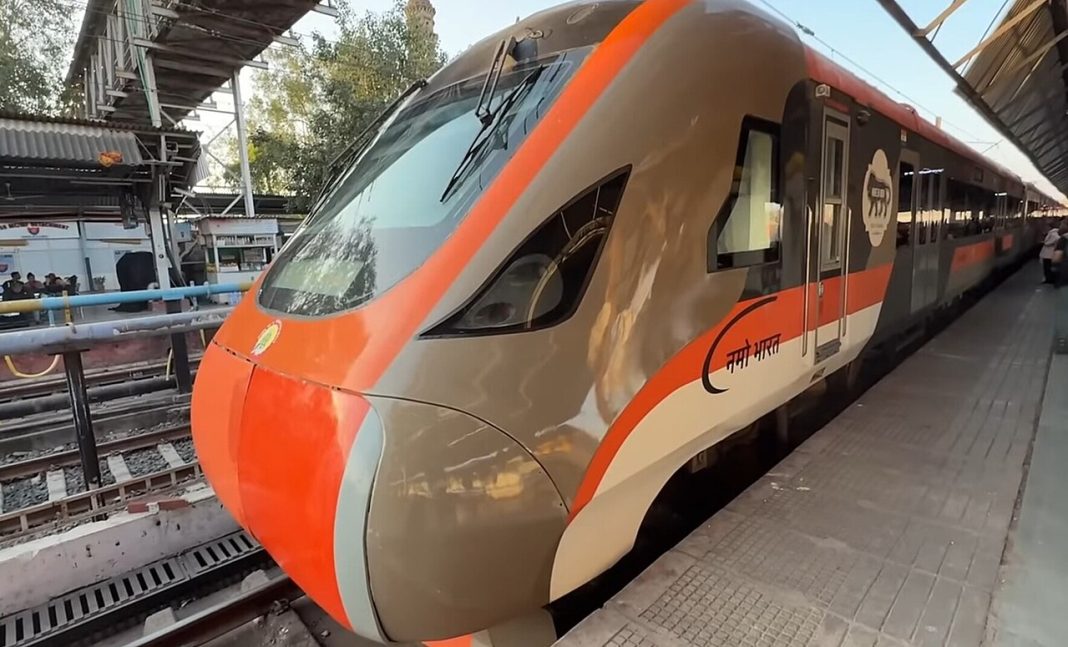

Ahmedabad is one of the few Indian cities with two proper public transport systems running simultaneously. You’ve got the Metro, which is fast and air-conditioned. You’ve also got BRTS (Janmarg), which covers almost twice the distance and reaches places the Metro doesn’t.
The question isn’t really “which is better?” It’s “which one gets me where I need to go, when I need to go there?”
This guide cuts through the noise and tells you exactly when to take each, which areas each covers, how the fares compare, and what you’re actually trading off.
Quick comparison: Metro vs BRTS
Table of Contents
| Factor | Metro (GMRC) | BRTS (Janmarg) |
|---|---|---|
| Network length | 67.56 km | 160 km (160+ stops) |
| Stations/Stops | 54 stations | 197 stops across 14+ routes |
| Fare range | ₹5 to ₹25 | ₹5 to ₹25 (varies by distance) |
| Operating hours | 6:20 AM to 10 PM | 6 AM to 11 PM (varies by route) |
| Speed | Fast, no traffic | Dedicated lanes, frequent stops |
| Air-conditioning | Yes, all trains | Mixed fleet |
| Coverage type | 4 main corridors + branches | Citywide routes, reaches outskirts |
When to take the Metro
You want speed. The Metro doesn’t sit in Ahmedabad’s traffic. If you’re going from CG Road to SG Highway or Thaltej, the Metro is faster because it’s grade-separated (elevated or underground). BRTS has dedicated lanes, but it still stops at traffic signals on some sections.
You’re visiting Ahmedabad for the first time. The Metro is easier to understand. Four clear lines, numbered stations, predictable routes. You can download the route map and figure it out without asking locals. BRTS has 14 routes, and unless you live here, it’s harder to follow.
You need to reach Gandhinagar or GIFT City. The Yellow Line connects to Gandhinagar (opened January 2026), and the Violet Line serves GIFT City. BRTS doesn’t go to either. If your destination is in those areas, Metro is your only rapid transit option.
You’re traveling during evening peak hours. The Metro runs until 10 PM. Some BRTS routes finish earlier, depending on which line you’re on.
You value certainty over cost. Metro tickets are the same price as BRTS, but the journey time is predictable. BRTS stops are frequent, which is great if you’re close to one, but means slower average speeds.
When to take the BRTS
Your destination isn’t on a Metro line. This is the big one. Metro covers the Blue Line (East-West through Navrangpura, C.G. Road, Thaltej), Red Line (North-South through Paldi, Ellisbridge, Maninagar), Yellow Line (to Gandhinagar), and Violet Line (to GIFT City). That sounds like a lot, but it’s only 4 routes.
BRTS goes everywhere else. Bopal, South Ahmedabad, western suburbs beyond the Metro’s reach, SP Ring Road, Ghuma Gam area, Daskroi, Vejalpur, Narol — if you’re in these neighborhoods, BRTS is likely your only rapid transit option.
Your journey has multiple short stops. If you’re making a medium-distance trip within the city (5-8 km) and you want to get off close to your final destination, BRTS stops every 500-800 meters. Metro stations are further apart. You might have to walk more from a Metro station than take a BRTS bus.
You’re traveling off-peak. BRTS runs from around 6 AM to 11 PM, depending on the route. That’s wider coverage than the Metro’s 6:20 AM to 10 PM window. If you have an early morning commute, some BRTS routes start earlier.
You want cheaper, more frequent stops. Both cost the same (₹5 to ₹25), but BRTS stops more often. If you’re someone who needs to hop off at specific neighborhoods rather than major corridors, BRTS is more convenient.
You’re a regular commuter. BRTS Smart Card gives you discounts. You can use the same card for your daily route. If the Metro had wider coverage, it would be the obvious choice for commuters, but since many areas depend on BRTS, frequent BRTS users should definitely get a smart card.
Coverage: Where each system actually goes
Metro reaches:
– Blue Line: Thaltej to Airport (via C.G. Road, Navrangpura, Vastrapur)
– Red Line: Harni to Viramgam (via Ellisbridge, Paldi, Maninagar, Mithakhali)
– Yellow Line: Gandhinagar South (Amba Township) to Gandhinagar Char Rasta (Gandhinagar side)
– Violet Line: Urvashi Complex to GIFT City
If you’re within a 2-3 km radius of these corridors, Metro is accessible.
BRTS reaches:
– From Gandhinagar (Amba Township) all the way to Narol in South Ahmedabad
– From Ghuma Gam (Ghatlodia, far west) to Hanspura Ring Road (Daskroi, far east)
– Routes cover Bopal, SP Ring Road, Vejalpur, Vasna, Paldi, Navrangpura, Daskroi, Usmanpura, and many more neighborhoods
BRTS (Janmarg) is one of the most extensive bus rapid transit systems in India outside of major metros, with dedicated lanes designed to avoid regular traffic congestion.
The key insight: if you’re in South Ahmedabad (below the Red Line), western suburbs (Bopal, Vejalpur), or eastern outskirts (Daskroi), BRTS is often your only high-capacity transit option. The Metro doesn’t reach these areas yet.
Fare comparison: They cost the same
Both systems charge ₹5 to ₹25 depending on distance. For a typical 5-8 km journey, expect to pay ₹10-15 on either system.
Metro: Get a Metro fares and smart card guide for 10% discount with a Smart Card. Reloadable cards are convenient.
BRTS: Also accepts Smart Cards with discounts. The fare calculator on the official Janmarg website shows exact fares for your start and end points.
Bottom line: Don’t choose based on price. Both are equally affordable. Choose based on which system gets you closer to your destination with fewer transfers.
Safety and comfort
Metro: Fully air-conditioned. Trains are modern, clean, and well-lit. Women-only compartments on most trains. The system is new enough that it feels safe. Peak hours are crowded (like any metro), but off-peak is comfortable.
BRTS: Mixed fleet. Newer buses are air-conditioned, older ones aren’t. They’re generally clean and well-maintained. Dedicated bus lanes mean you’re not mixing with regular traffic. Women-only seating. The system is well-established and has a good safety reputation.
For women traveling alone, both systems are safe. BRTS has the advantage of being a bus system, so you can see where you are. Metro is enclosed, but trains are frequent and you’re never far from help.
The honest verdict
For most Ahmedabadis, you won’t choose one or the other. You’ll use both depending on your journey.
If you work in a Metro-served corridor (Thaltej tech park, C.G. Road, Ellisbridge area, GIFT City), the Metro is your daily commute. If you live and work in areas BRTS covers but Metro doesn’t, BRTS is your system.
The real advantage of Ahmedabad is that you have a choice. Many Indian cities have either a Metro or BRTS, but not both. Ahmedabad’s combination means even if one system doesn’t reach you, the other probably does. And the coverage overlap means you can sometimes take either one and choose based on timing or comfort.
If the Metro ever expands to reach Bopal, Vejalpur, and South Ahmedabad, the equation will shift. But for now, in 2026, you need BRTS to reach most of Ahmedabad. The Metro gets you there faster if you’re already on its corridor.
FAQ
Can I use one Smart Card on both Metro and BRTS?
No, not yet. They’re separate systems. You need a Metro Smart Card for the Metro and a BRTS Smart Card for the buses. There’s been talk of a unified system, but it hasn’t happened. If you use both regularly, you’ll need both cards.
Which is faster: CG Road to Motera Stadium by Metro or BRTS?
Metro wins. The Blue Line goes directly through C.G. Road. Motera is right off the Red Line near Thaltej. Total time: roughly 25-30 minutes. BRTS would require a transfer and take 45-60 minutes depending on route. For this journey, Metro is the obvious choice.
I live in Bopal and work near SG Highway. What’s my best option?
BRTS to the closest Metro station (likely Thaltej or Vastral), then Metro. Or straight BRTS if there’s a direct route. Check the BRTS route planner on the official Janmarg website because the mix of routes changes. But realistically, you’ll spend some time on BRTS no matter what since Bopal isn’t directly on a Metro line.
Is there a frequency difference? Which comes more often?
Metro trains typically run every 5-8 minutes during peak hours and 10-15 minutes off-peak. BRTS buses vary, but expect 10-15 minutes on main routes during peak, and 20-30 minutes on secondary routes. Metro is more frequent on its existing corridors. BRTS is more frequent in terms of actual stops per km.
Want more details? Check the Ahmedabad Metro complete guide for full route maps and timings. If you’re heading to GIFT City, read about getting to GIFT City from Ahmedabad, which covers both Metro and BRTS options.