
Manek Chowk is the most famous open-air market in Ahmedabad, and arguably the most famous in all of Gujarat. It sits at the centre of the old walled city, surrounded by heritage structures built when Ahmedabad was founded in 1411. Over the course of a single day, this one square serves three entirely different communities: vegetable vendors in the early morning, bullion and jewellery traders in the afternoon, and hundreds of hungry Amdavadis at night.
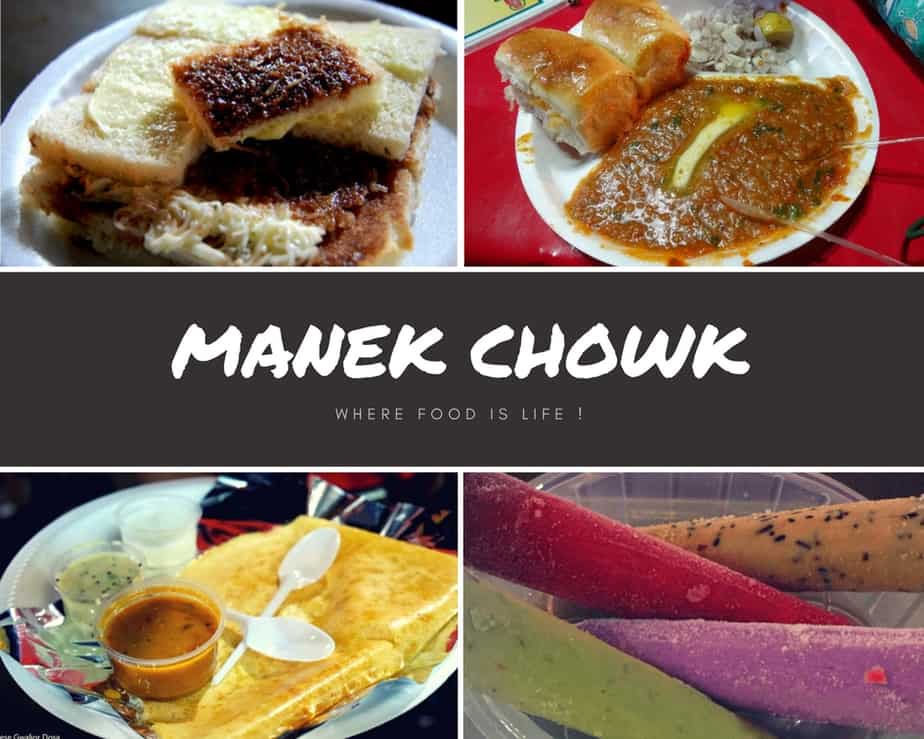
The night market is what most visitors come for. From around 8pm until well past midnight, the square fills with food stalls selling Pav Bhaji, Gwalia Dosa, Chocolate Ice Cream Sandwich, Kulfi Falooda, and much more. Entry is free. You pay only for what you eat.
A square with 600 years of history
Table of Contents
The name Manek Chowk comes from Baba Maneknath, a Sufi saint who reportedly helped Ahmed Shah I choose the site for Bhadra Fort in 1411. The story holds that the saint blessed the land before the fort’s foundation was laid, and the square that grew up outside its walls was named in his memory. Maneknath’s shrine still stands within the square today.
For more than six centuries, the square has been at the commercial heart of the old city. It was the financial trading hub of Ahmedabad during much of its mercantile history, and the surrounding lanes, full of havelis, mosques, and temples, reflect the layered prosperity of that era.
Today, Manek Chowk sits within the UNESCO World Heritage Site of Historic City of Ahmedabad, inscribed in 2017 as India’s first city to receive the designation.
The three lives of Manek Chowk
Morning: the vegetable market
Between approximately 5am and 10am, Manek Chowk operates as a wholesale and retail vegetable market. Trucks arrive early with produce from across Gujarat, and vendors set up on the stone paving. The square is at its most local during these hours: professional buyers, cooks from nearby restaurants, and households picking up ingredients for the day.
Afternoon: the jewellery and bullion market
From late morning into the afternoon, the character of the square shifts entirely. The vegetable vendors pack up, and the jewellery and gold traders take over the surrounding arcades and shops. This is one of Ahmedabad’s oldest jewellery trading areas, and the merchants here deal in gold, silver, and precious stones. The city has a long tradition of jewellery craftsmanship; this is where much of that trade happens.
Night: the street food market
By 8pm, the jewellery shops have closed and the food stalls appear. Carts, griddles, and counters fill the square. The smell of butter on a hot tawa reaches you from halfway down the lane. On weekends and festival nights, finding a place to stand can be a challenge.
The food scene here dates to the 1970s, when Manek Chowk was surrounded by cinema halls. After late-night shows, hungry audiences poured out onto the streets looking for something to eat. A few vendors saw the opportunity and started serving hot food past midnight. The tradition stuck, and the late-night crowd eventually became the main draw.
What to eat at Manek Chowk
Pav Bhaji
The definitive Manek Chowk dish. Vendors here serve it with extra butter on both the bhaji and the pav, and the quality of the bhaji (thick, well-spiced, cooked on a large iron griddle) is what sets this apart from the version you get at a restaurant. Order it topped with raw onion and a squeeze of lemon. Prices typically run ₹60–120 per plate.
Gwalia Dosa
This is Manek Chowk’s own version of masala dosa. The dosa is larger and thinner than the South Indian restaurant version, cooked on a well-seasoned iron tawa with plenty of ghee, and served with coconut chutney and sambar. Amdavadis drive across the city for it.
Chocolate Ice Cream Sandwich
One of Ahmedabad’s most unusual street food traditions: vanilla ice cream placed between two slices of bread, pressed together, and eaten like a sandwich. It sounds improbable and it works. Several stalls at Manek Chowk have been making this for decades, and it has become one of the more photographed items in the square.
Kulfi and Kulfi Falooda
Traditional kulfi served on a stick, or the falooda version with vermicelli, rose syrup, and basil seeds in a tall glass. The kulfi here is made the traditional way: set in metal moulds and frozen overnight. The mango and kesar (saffron) flavours are particularly good.
Bhajiya and other snacks
Assorted deep-fried fritters (bhajiya) made from onion, potato, and green chilli, served hot with green chutney. Also look out for Sev Puri, Dabeli, and various Gujarati thali items at different stalls.
Practical information
| Detail | Information |
|---|---|
| Entry | Free |
| Food stalls open | From approximately 8pm daily |
| Peak hours | 9pm to midnight |
| Best days | Every day; busier on weekends |
| Best season | October to February (cooler weather) |
| Location | Near Bhadra Fort, Old Ahmedabad |
Address and how to reach
Manek Chowk is in the old walled city area, near Bhadra Fort and Teen Darwaja. It is approximately 4 km from Ahmedabad railway station.
By auto-rickshaw: Ask for “Manek Chowk” or “Bhadra”. Both are well known. Fare from the railway station is roughly ₹60–80 by meter.
By BRTS: The Bhadra bus stop on the BRTS corridor is a 5-minute walk from the square.
By car: Parking near Manek Chowk is limited. The streets of the old city are narrow; parking in designated areas near Teen Darwaja and walking in is advisable.
Heritage walk: what to see nearby
Manek Chowk is the ideal starting point for a heritage walk through Old Ahmedabad. Within walking distance:
Bhadra Fort (0.1 km): Built by Ahmed Shah I in 1411, the same year Ahmedabad was founded. The fort’s outer walls and Bhadrakali temple inside are among the oldest surviving structures in the city.
Teen Darwaja (0.3 km): A triple-arched gateway built in 1415, one of the finest examples of early Ahmedabad’s Indo-Saracenic architecture.
Jama Masjid (0.2 km): A large Friday mosque with 260 columns and two minarets, built in 1424. The blend of Hindu and Islamic architectural elements in the columns is a signature feature of early Ahmedabad mosques.
Rani no Hajiro and Badshah no Hajiro (0.3 km): Royal tombs from the 15th and 16th centuries, set in enclosed courtyards. These are quiet, shaded spaces that feel far removed from the market bustle outside.
For more on Ahmedabad’s museum landscape before or after your old city walk, the museums guide for Ahmedabad covers the city’s best collections. And if you enjoy the outdoor festival atmosphere, the Kankaria Carnival in December offers a different kind of Ahmedabad night out.
Tips for your visit
- Arrive after 9pm for the best atmosphere. Earlier in the evening, some stalls are still setting up.
- Come hungry. The portions are generous and the temptation to try multiple stalls is real.
- Cash is preferred at most stalls, though some accept UPI. Carry small denomination notes.
- Weekends draw larger crowds. If you prefer a quieter visit with easier access to stalls, a weekday evening works well.
- The square can get crowded to the point of feeling claustrophobic on major festival nights. On those evenings, the energy is spectacular but plan for crowds.
- Wear comfortable shoes. The paving in the old city is uneven.
- For dinner recommendations in a different setting, the rooftop restaurants in Ahmedabad guide covers the city’s best elevated dining options as a contrast to street food.
Last verified: March 2026
Frequently Asked Questions
What time does Manek Chowk street food market open?
Food stalls typically start setting up from around 8pm, with most stalls fully operational by 9pm. The market runs well past midnight, often until 1–2am on weekends and festival nights.
Is Manek Chowk free to visit?
Yes. Entry to Manek Chowk is free. You pay only for the food and items you buy from vendors.
What is Manek Chowk famous for?
Manek Chowk is most famous as Ahmedabad’s premier night street food market. The most iconic items are Pav Bhaji, Gwalia Dosa, Chocolate Ice Cream Sandwich, and Kulfi Falooda.
Is Manek Chowk in the UNESCO World Heritage Site?
Yes. Manek Chowk is within the Historic City of Ahmedabad, which was inscribed as a UNESCO World Heritage Site in 2017, the first city in India to receive this designation.
What else happens at Manek Chowk during the day?
During the morning (approximately 5am to 10am) it operates as a vegetable market. During the afternoon it becomes a hub for jewellery and gold trading. The street food market takes over from the evening onwards.
How do I get to Manek Chowk?
The easiest approach is by auto-rickshaw to Bhadra or Manek Chowk. The BRTS Bhadra bus stop is also within walking distance. Parking near the old city is limited; it is easier to arrive by hired transport.
Manek Chowk sits at the heart of Ahmedabad’s UNESCO World Heritage walled city. If you’re visiting during the day, the Ahmedabad heritage walk — which starts at Bhadra Fort, just a short walk from the Chowk — is the ideal way to explore the surrounding historic district before the evening food market sets up.

Nice post!