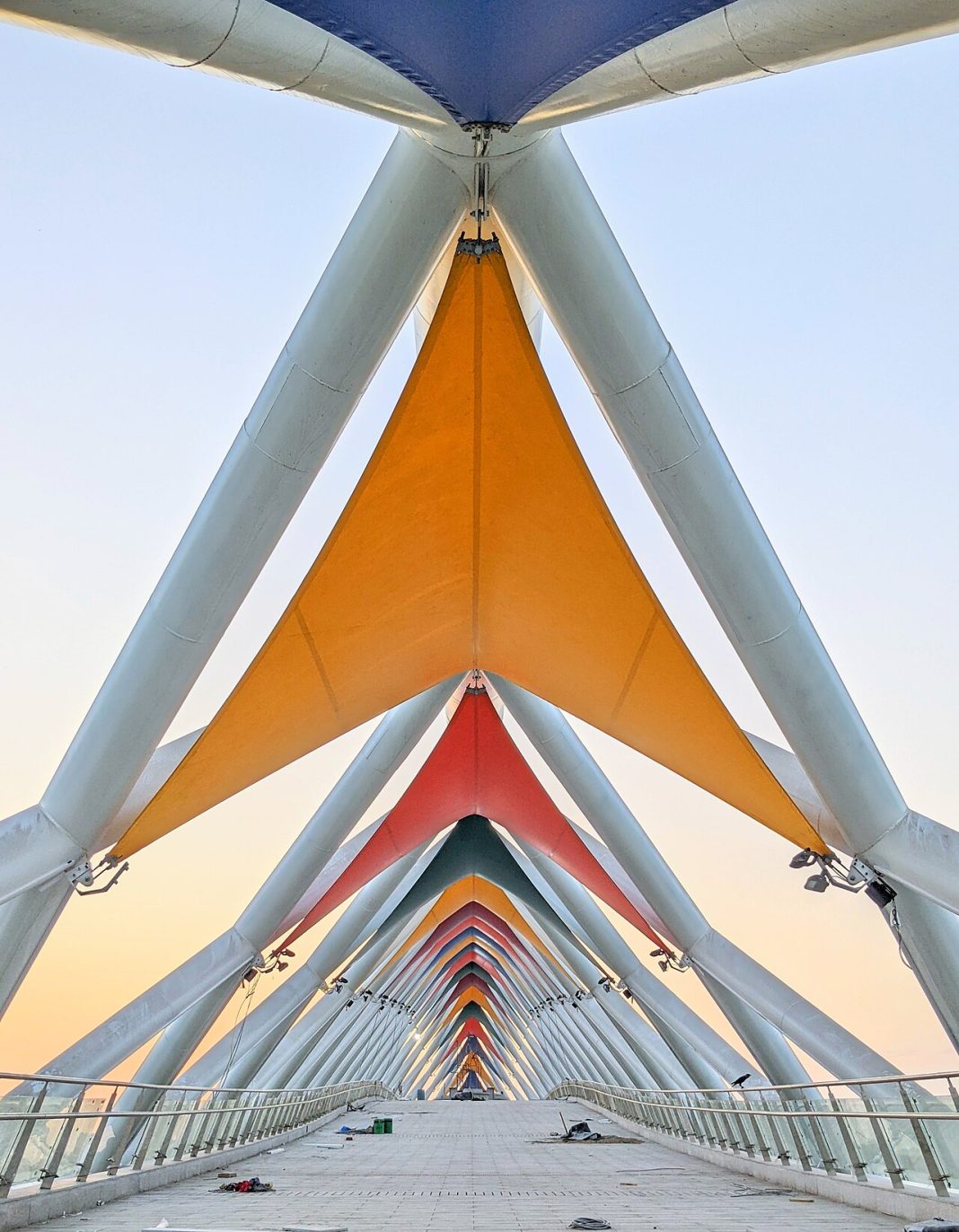

Atal Bridge sits on the Sabarmati River Sabarmati Riverfrontfront and feels like stepping into the future. It’s a 300-metre pedestrian bridge shaped like a kite, designed by STUP Consultants and built by P&R Infraprojects. Prime Minister Narendra Modi opened it on 27 August 2022, and since then it’s become Ahmedabad’s top tourist draw, pulling in over 7.7 million visitors and generating Rs 27 crore in revenue for the city.
What makes it worth the walk? The bridge connects the east and west banks of the river between Ellis Bridge and Sardar Bridge. You get unobstructed views of the Sabarmati as you walk. There’s a glass floor section with four panels where you can see straight down to the river below, which is genuinely unsettling if you’re afraid of heights. In the evening, LED lights transform the bridge into something out of a different city altogether.
Quick facts about Atal Bridge
Table of Contents
| Detail | Information |
|---|---|
| Length | 300 metres |
| Width | 10 metres at ends, 14 metres in middle |
| Type | Steel truss pedestrian bridge with kite-shaped design |
| Entry fee | Rs 30 (ages 12-59), Rs 15 (seniors 60+, children 3-12), free (under 3, differently-abled) |
| Timings | 9 AM to 9 PM daily |
| Closed | Only for special events (check before visiting) |
| Glass floor | 4 panels of 24 sq. metres each |
| Construction cost | Rs 74 crore |
| Opened | 27 August 2022 |
Where is Atal Bridge?
The bridge spans between Ellis Bridge and Sardar Bridge on the Sabarmati Riverfront. You’re looking at the river flowing north and south. The west bank has the Sabarmati Ashram visible in the distance. The eastern side connects to the upper promenade of the riverfront, while the western side connects to the lower section. You can enter from either direction depending on where you’re coming from.
The bridge is positioned so you get views up and down the river. From the midpoint, the Sabarmati splits around a sandbar to the north, and you can see how wide the river becomes. The lighting at the ends creates a frame when you photo pre-wedding photoshoot spotgraph the river from the middle.
Timings and entry
The bridge opens at 9 AM and closes at 9 PM every day. There’s a 30-minute limit per visit, though most people finish in 15 to 20 minutes. Tickets are sold at entry points on both sides.
Entry fees are straightforward: Rs 30 for adults aged 12 to 59, Rs 15 for senior citizens (60+) and children aged 3 to 12. Children under 3 and people with disabilities get in free. You’ll need to show ID for senior citizen rates.
Temporary closures happen occasionally for festivals or events. In March 2026, the bridge closed partially for Holi. Check the Sabarmati Riverfront website or call ahead if you’re visiting during a major festival.
What to see and do on the bridge
Walking across is the main activity. The bridge is pedestrian-only, so there’s no vehicular traffic. The width varies from 10 metres at the ends to 14 metres in the middle, so the midsection feels more spacious.
The glass floor panels are the highlight. Four transparent sections let you look down at the river. People stop here for photos, and it’s slightly unnerving if you’re not comfortable with heights. Children find it thrilling. The glass panels are load-bearing and undergo regular inspections, so it’s completely safe.
The kite-inspired shape means the railings and truss create interesting diagonal lines for photographs. The colourful fabric panels that shade parts of the bridge are inspired by kite designs and add colour to your photos.
Photography is popular here. The views change throughout the day as light shifts. From the bridge, you can photograph the river, the distant cityscape, and the riverfront gardens below. People come back multiple times to capture different lighting.
Best time to visit
Early morning, between 6 AM and 8 AM, is quiet. You’ll see the river in soft light and avoid crowds. The weather is cool, especially between November and February.
Late evening between 6 PM and 8 PM is when most visitors come. You catch the last light of day and then the bridge lights up as it gets dark. The LED lights create a different mood. This is peak time, so expect crowds and slower movement.
Night visits between 8 PM and 9 PM offer the best lighting for photography. The bridge is fully lit by then, and the reflections on the river are striking. It’s less crowded than the 6-8 PM window. The temperature is cooler too.
Avoid afternoons between 2 PM and 5 PM. The sun is harsh, the bridge gets hot, and it’s not pleasant for walking. Also skip the peak summer months of April to June. The temperature makes walking outdoors exhausting.
Weekends and public holidays bring larger crowds. If you prefer a quieter experience, visit on a weekday morning.
How to reach Atal Bridge
From CG Road area: Take an auto or cab south towards the riverfront. The journey takes 10 to 15 minutes depending on traffic. Tell the driver you’re heading to Atal Bridge on the Sabarmati Riverfront. They’ll drop you at one of the entry points.
From SG Highway (GIFT City area): Head towards the river on any connecting road towards the east bank. The journey is about 20 to 25 minutes. SG Highway connects directly to riverfront roads.
From Old Ahmedabad: Take an auto or bus towards the riverfront via Relief Road or Mithakhali Six Roads. The distance is about 4 to 6 kilometres depending on your starting point, and it takes 20 to 30 minutes.
Using BRTS: Take a rapid bus route towards the riverfront. The bus stops are within 500 metres of the bridge. Check the current routes as they’re updated regularly.
Using metro: The Gandhigram Metro Station is the closest. Exit the station and take a short auto ride to the bridge, about 1 kilometre away. Walk if you’re comfortable, though the route is not well-marked.
Using your own vehicle: There’s parking available near the riverfront. The parking charges are minimal, around Rs 30 to 50 for a few hours. Auto parking is also available.
Auto-rickshaws are the fastest option if you’re not driving. Most drivers know the location. Expect to pay Rs 60 to 150 depending on where you start.
What’s nearby
The Sabarmati Riverfront has gardens, walking paths, and seating areas on both banks. Spend an hour walking around after crossing the bridge. There are food stalls and small shops selling snacks.
Food options are limited directly on the bridge, but the riverfront has cafes and small vendors. You can’t bring food onto the bridge itself, but you can eat in the gardens below.
The Sabarmati Ashram is visible from the bridge and is worth a visit if you have time. It’s on the west bank about 2 kilometres south. Our Sabarmati Riverfront guide covers everything in the area.
If you’re exploring Ahmedabad, Kankaria Lake is another major attraction in the city and worth a half-day visit. You might also check out our GIFT City guide while you’re exploring the greater Ahmedabad area.
Tips for your visit
Wear comfortable shoes. The bridge is 300 metres, but you’re walking on a steel structure, and it can feel longer if your feet hurt.
Bring water, especially if visiting between 2 PM and 5 PM. The bridge is exposed to the sun, and there’s nowhere to buy water on it.
Use sunscreen and wear a hat. The shade from the fabric panels is partial, and the sun reflects off the steel.
Go early morning or evening for the best photos and the coolest temperature.
Avoid bringing bags with you if possible. It gets cramped when there are crowds.
The bridge has a 30-minute limit, but you don’t need more than 20 minutes unless you’re spending time on the glass floor or taking photos.
If you’re visiting with young children, hold their hands on the glass floor section. Kids get excited and may not pay attention to the edge.
The bridge can feel slippery when wet during monsoon season. Wear shoes with good grip if visiting between June and September.
Frequently asked questions
Is the glass floor safe?
Yes. The glass panels are load-bearing and capable of supporting multiple people at once. Structural inspections are regular. The glass is treated so it doesn’t become slippery when wet.
What’s the best time for photography?
Early morning light is soft and flattering. Evening between 6 PM and 8 PM captures both daylight and artificial lighting. Night photography works best after 8 PM when the LED lights are at full brightness.
Can I bring a bicycle?
The bridge is pedestrian-only. Bicycles are not allowed.
Is there parking?
Yes, parking is available near the riverfront. It costs Rs 30 to 50 for a few hours. Auto parking is also available nearby.
How long does it take to cross?
Most people take 15 to 20 minutes. The official limit is 30 minutes. If you’re taking photos and using the glass floor, budget 25 minutes.
Is it safe for women to visit at night?
Yes. Ahmedabad is safe, and women visit the riverfront in the evening and at night without issues. There are crowds in the evening, and the area is well-lit. Weekday mornings are also quiet and safe.
What should I do if I’m afraid of heights?
Avoid the glass floor section, but you can still walk the rest of the bridge. The railings are solid and high, so you won’t see a drop from most of the bridge.
For more information about the Sabarmati Riverfront and current timings, visit the Sabarmati Riverfront Development Corporation.
Word count: 1,354