
Ahmedabad holds a distinction that few Indian cities can claim: it became India’s first UNESCO World Heritage pre-wedding photoshoot locations Sabarmati Riverfront City in July 2017. For anyone wanting to experience the soul of this historic metropolis, a heritage walk through the walled old city is the single best way to spend a few hours. These walks take you back 600 years in time through narrow lanes, wooden havelis, and centuries-old religious structures that define what it meant to build a city in medieval India.
Why Ahmedabad earned UNESCO world heritage city status
Table of Contents
When UNESCO granted Ahmedabad its world heritage status, it recognized the city’s unique urban fabric. Founded by Ahmed Shah I in 1411, the walled city represents a masterpiece of medieval urban planning. What makes it special is not one grand monument, but rather the entire ecosystem of traditional neighbourhoods, gated streets, step wells, temples, mosques, and wooden architecture that have survived largely intact through centuries of history.
The city was designed with a specific philosophy: each neighbourhood (or “pol”) was a self-contained residential cluster with its own gates, water sources, and even religious spaces. This concept of community-based urban development is rare and historically significant, which is why UNESCO found it worthy of inscription.
The old city: heart of Ahmedabad’s heritage
The walled old city covers roughly 5 square kilometres and is home to approximately 450,000 people who still live and work within its boundaries. This is not a museum frozen in time. It’s a living, breathing city where residents have continuously inhabited the same homes their ancestors built 300–400 years ago. When you walk these lanes, you’re witnessing history as it unfolds through the daily lives of people who maintain this heritage.
The density of historic structures here is notable. Within just a few kilometres, you’ll find over 350 pols (traditional housing clusters), dozens of temples, several mosques including the Jama Masjid, numerous havelis (mansions), and step wells that once served as the primary water sources for the entire city.
What is a pol? Understanding traditional Ahmedabad neighbourhoods
Before exploring specific routes, it’s essential to understand what a pol is. A pol is not just a house. It’s a complete residential neighbourhood designed as a gated, self-sufficient community. Each pol typically has:
- Main gate: A large wooden gate that provided security and defined community boundaries
- Central courtyard or plaza: A communal gathering space used for festivals, meetings, and celebrations
- Interconnected houses: Multiple residences sharing common pathways and facilities
- Step well or reservoir: A vav (step well) that supplied water for drinking, bathing, and daily use
- Small temples or shrines: Often dedicated to the family deity or a local saint
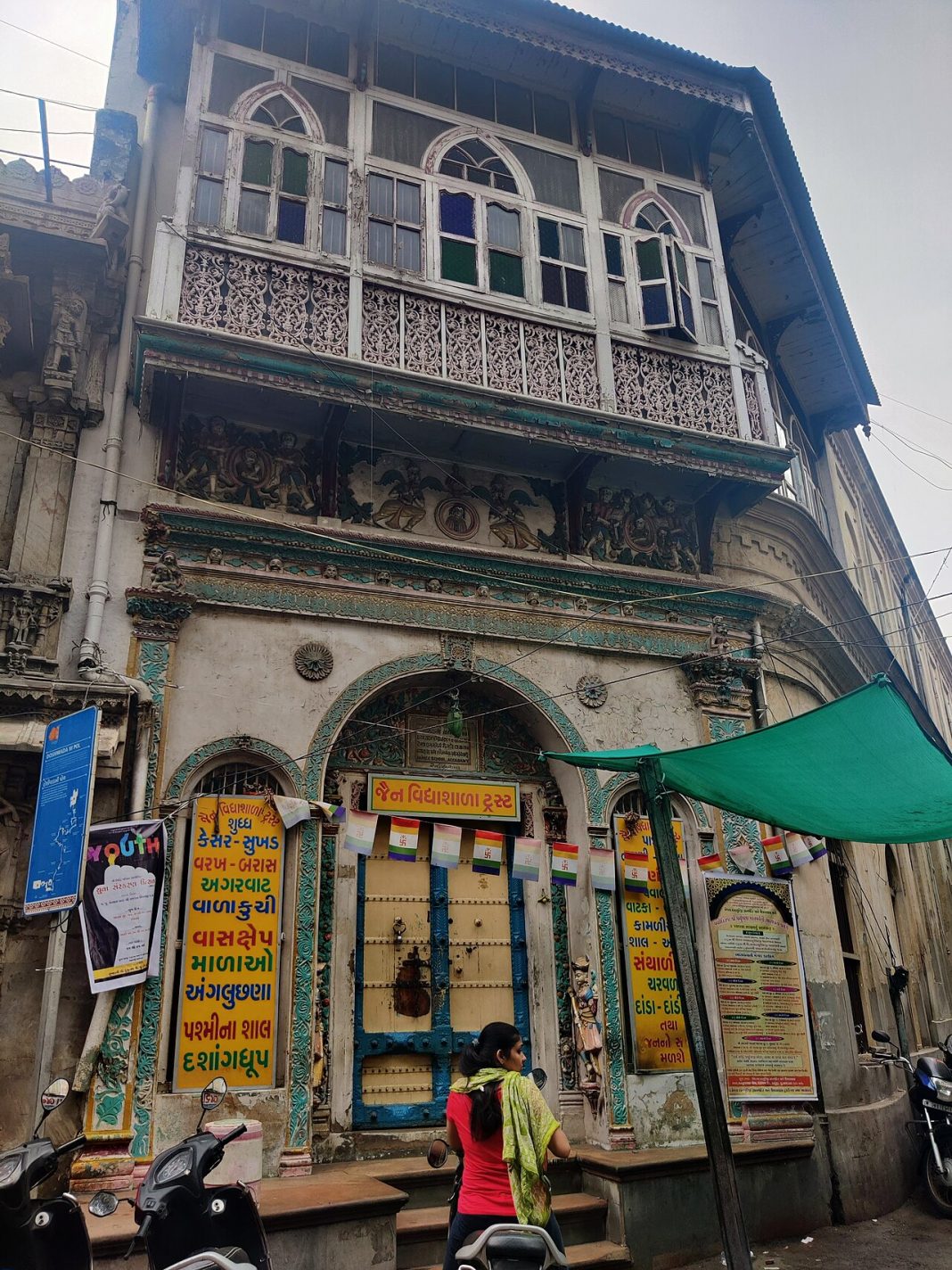
Walking through a pol is an architectural journey. You’ll see detailed wooden carvings on house facades, carved windows with traditional lattice work (called jaali), and brightly painted wooden doors and shutters. Many homes still feature courtyards open to the sky, allowing natural light and ventilation. This climate-adapted design proved ideal for Ahmedabad’s hot, dry climate, where thick walls and shaded courtyards kept homes cool.
Key landmarks on heritage walk routes
Bhadra Fort
Construction of Bhadra Fort began in 1411 under Ahmed Shah I and was completed by 1413. Originally, it served as the seat of power for the ruler and later became the administrative centre during the Mughal period (1572–1707). Today, the fort is a symbol of medieval military architecture, with its characteristic massive walls and bastions. The most famous feature is Manek Burj, the first bastion, which offers panoramic views of the old city if you’re allowed access during heritage walks.
Teen Darwaja (three gates)
Built in 1415 by Ahmed Shah, Teen Darwaja is the ceremonial eastern gateway to the fort area. The name literally means “three gates” in Gujarati, referring to its three arches. This is often the ending or starting point of heritage walks and one of the most photographed structures in the old city. Standing at the Teen Darwaja, you can visualize how this gate once controlled the flow of trade, people, and military movements in and out of the fortified city.
Jama Masjid (Friday mosque)
The Jama Masjid of Ahmedabad, built in the 15th century, is an architectural marvel. Its most distinctive features are the elaborate wooden ceilings, carved pillars, and ornamental brackets. The mosque covers a vast courtyard and can accommodate thousands of worshippers. It remains one of the most important religious structures in Ahmedabad and is a representation of the city’s syncretic culture where Hindu and Muslim artisans worked together to create monuments. For more detailed information about Islamic architecture in the city, visit this UNESCO resource.
Sidi Saiyyed mosque
This mosque, built in 1573, is famous for its detailed stone lattice screens (jaali). The carved stone windows feature geometric and floral patterns so finely executed that they resemble lace. These screens served both aesthetic and practical purposes: allowing ventilation while maintaining privacy inside the prayer hall. Photography enthusiasts often focus on these screens because they create beautiful shadow patterns when sunlight filters through them.
Pols in Manek Chowk
Manek Chowk remains the heart of the old city. This is where traditional jewellery shops operate by day and street food vendors take over at night. The surrounding pols, including Aba ni Pol, Sheth ni Pol, and others, represent the classic Ahmedabad housing pattern. Many pols are accessible to visitors, and residents often welcome respectful tourists to view the architecture and hear stories of their families’ centuries-long habitation.
Step wells (vavs)
Several functioning and semi-functional step wells exist in the old city. These aren’t just water sources; they’re examples of clever engineering. The Adalaj Stepwell is perhaps the most famous, though it’s technically outside the walled city (19 km away). Within the heritage walk area, smaller step wells display the same craftsmanship and functionality.
Kalupur Swaminarayan temple
This 19th-century temple is often the starting point for the official AMC heritage walk. It’s a more recent structure compared to medieval monuments, but it’s architecturally significant and remains an active place of worship. The temple’s intricate wooden carvings and the religious activity within make it a living cultural space rather than a static monument.
Official guided heritage walks in Ahmedabad
AMC morning heritage walk
The most accessible and structured option is the free heritage walk conducted by the Ahmedabad Municipal Corporation (AMC) in association with the Akshar Travels project advisory. As of 2025, here are the details:
When: Every Sunday morning
Time: 7:45 AM to 10:30 AM (approximately 2.5 hours)
Starting Point: Swaminarayan Mandir Road, Kalupur (specifically, the 19th-century Swaminarayan Temple)
Cost: INR 200 per Indian citizen; INR 350 for international tourists
Duration: 2.5 to 3 hours
Group Size: Typically 20–40 people, depending on season
What’s Included:
– Trained guide with historical knowledge
– Planned route covering major landmarks
– Access to pols and courtyards (where residents permit)
– Interpretive information about architecture and history
How to Register:
Contact the AMC office or inquire at the Kalupur temple on the morning of the walk. Some sources suggest advance booking is possible, but walk-ups are generally accepted.
Other heritage walk organizers
Several private organizations and tour companies conduct heritage walks:
- House of MG: Offers curated heritage walks with an emphasis on textile history and traditional crafts
- ATHA (Ahmedabad Heritage Trust Association): Community-based organization dedicated to preserving old city heritage
- INTACH Ahmedabad Chapter: Indian National Trust for Art and Cultural Heritage conducts periodic heritage talks and walks
- CEPT University: The university’s architecture department occasionally organizes educational heritage walks for students and public
Private walks typically cost INR 400–1000 per person and offer smaller group sizes (8–15 people), more flexible timings, and specialized themes (textile history, step wells, havelis, etc.).
Self-guided heritage walk: the essential route
If you prefer to explore at your own pace, here’s a recommended 2.5-hour self-guided route covering the main attractions:
Start: Swaminarayan Temple, Kalupur
Duration: 2–3 hours
Distance: Approximately 4–5 km on foot
Difficulty: Easy to moderate (mostly flat, narrow lanes)
- Begin at Swaminarayan Temple (Kalupur). Take time to view the wooden architecture and intricate carvings.
- Walk south towards Bhadra Fort. En route, you’ll pass through several pols with carved wooden doors and windows.
- Reach Bhadra Fort’s main entrance. If access is permitted, walk around the external walls and observe the fortification design.
- Exit and head to Teen Darwaja. This is a short walk and is an excellent photo point.
- From Teen Darwaja, navigate towards Jama Masjid (approximately 200 metres west). The mosque is open to visitors outside prayer times. Remove shoes before entering.
- Continue westward to Sidi Saiyyed Mosque. The stone jali screens are best photographed in mid-morning when sunlight is strong.
- Explore the Manek Chowk area. Visit the surrounding pols and observe daily life. This is the best place to interact with residents.
- Make your way to Sardar Bazar for street food or simply to soak in the atmosphere of the bustling market.
- Return to Kalupur or exit via Teen Darwaja.
| Landmark | Distance from Start | Time to Spend | Photography Notes |
|---|---|---|---|
| Swaminarayan Temple | 0 km | 30 min | Best early morning light |
| Bhadra Fort | 1 km | 30 min | External walls, bastion views |
| Teen Darwaja | 1.5 km | 20 min | striking three-arch facade |
| Jama Masjid | 2 km | 30 min | Interior pillars, courtyard |
| Sidi Saiyyed Mosque | 2.5 km | 20 min | Stone jali screens, mid-morning |
| Manek Chowk | 3 km | 30 min | Street life, lively colors |
Best time to visit heritage walks
Season: October to February (coolest months)
Time of Day: Early morning (6–9 AM) is ideal
Why early morning? First, it’s significantly cooler. Ahmedabad can reach 35–40°C even in winter afternoons, and the walled city has narrow lanes with minimal shade. Walking between 6–9 AM keeps you safe from heat exhaustion. Second, the old city is quieter in early morning, and residents are more welcoming. Third, the light is softer and ideal for photography. Finally, vendors and shop owners are just opening up, giving you a chance to witness the city’s daily rhythm awakening.
Worst time to visit: May to September (monsoon and post-monsoon period). Temperatures exceed 40°C, and lanes become slippery due to water logging. For a better experience, plan your visit during pleasant weather in the winter months when the BRTS and metro are also easiest to navigate.
What to bring and how to prepare
Essential Items:
– Water bottle (minimum 1.5 litres)
– Comfortable walking shoes with good grip (lanes are uneven and sometimes slippery)
– Sun hat or cap
– Sunscreen and sunglasses
– Light, breathable clothing (cotton is ideal)
– Small backpack
– Phone or camera for photography
Cultural Etiquette:
– Dress modestly (avoid shorts, sleeveless tops) to respect religious spaces
– Always ask for permission before photographing people
– Remove shoes when entering temples or mosques
– Don’t touch religious idols or structures unless permitted
– Be respectful of residents’ privacy. You’re walking through people’s homes, not just tourist attractions
Photography tips for heritage walks
The architectural details in the walled city are extraordinary. It is a photographer’s paradise. Here are specific tips:
-
Golden Hour: Photograph Bhadra Fort and Teen Darwaja during the first 30 minutes after sunrise. The warm light enhances the sandstone colour and creates dramatic shadows on carved details.
-
Stone screens (Jaali): For Sidi Saiyyed Mosque, position yourself so sunlight passes through the lattice screens. This creates shadow patterns on the floor. Bring a tripod if you have one.
-
Wooden Architecture: Close-ups of carved wooden doors, windows, and lintels are striking. Use macro or close-focus mode if available. Early morning light is flattering.
-
Street Life: Manek Chowk and busy lanes offer candid street photography opportunities. Respect residents and ask permission before photographing faces.
-
Vertical Compositions: The narrow lanes have tall buildings on either side. Use vertical framing to capture the sense of confinement and scale.
-
Avoid Harsh Midday Light: If you must walk after 10 AM, look for shaded lanes and focus on interior courtyard photography.
FAQ
Q1: Is the heritage walk free?
The official AMC Sunday heritage walk costs INR 200 for Indian citizens and INR 350 for international tourists. This is a nominal fee. It is one of Ahmedabad’s best affordable experiences. Self-guided walks are completely free, though hiring a private guide (INR 1000-3000 for a small group) can enhance the experience with detailed historical context.
Q2: How long does a heritage walk typically take?
A guided walk conducted by AMC takes approximately 2.5–3 hours, covering key landmarks systematically. A leisurely self-guided walk, including time to photograph and interact with locals, can take 4–5 hours.
Q3: Can I visit pols as a tourist?
Yes, many pols are open to respectful visitors, though some residents may prefer not to be disturbed. It’s always courteous to ask. Some pols have community-based tourism initiatives where residents actively welcome visitors and share stories about their homes.
Q4: Is it safe to walk alone in the old city?
Yes, the walled old city is generally safe for solo travellers, especially women. The lanes are busy during the day, and residents are accustomed to visitors. However, go during daylight hours, avoid carrying expensive jewellery or large sums of cash, and stay in well-populated areas.
Q5: What’s the best way to reach Swaminarayan Temple in Kalupur?
From the railway station: 3–4 km away. Take a local auto-rickshaw (approximately INR 50–80) or use Uber/Ola. From Law Garden area: approximately 2 km, reachable by foot or auto. By car: Limited parking is available in the old city. You can also consider using public transport from nearby areas.
Q6: Are there step wells included in heritage walks?
Yes, heritage walks pass by or stop at several step wells, though most are partially or fully drained due to modern water supply systems. The Adalaj Stepwell, located 19 km from the old city, is the most impressive and is sometimes included in half-day tour packages from the walled city.
Q7: Can I visit temples and mosques as a non-Hindu or non-Muslim visitor?
Most temples and mosques in the walled city welcome respectful visitors. Remove shoes before entering, maintain a quiet demeanor, and avoid religious ceremonies unless invited. Photography inside prayer halls may be restricted. Always ask permission before taking photos.
Q8: What if I visit during monsoon season?
Visiting during June–August is not recommended due to heavy rainfall and temperatures exceeding 40°C. Lanes become waterlogged and slippery. If you must visit during monsoon, bring waterproof shoes, an umbrella, and lightweight rain gear.
Conclusion
A heritage walk through Ahmedabad’s walled old city is far more than a tourist activity. It’s a window into the mindset and craftsmanship of medieval urban planners. Every carved wooden window, every gated entrance to a pol, every detailed jali screen tells a story of a civilization that prioritized community, craft, and sustainability. In 2025, as Ahmedabad rapidly modernizes with new infrastructure like the metro, heritage walks help you understand the city’s origins.
Whether you opt for the structured AMC Sunday walk or prefer the flexibility of self-guided exploration, allocate at least half a day for this experience. Bring water, wear comfortable shoes, start early, and be prepared to step back 600 years in time. The UNESCO World Heritage City label is well-deserved. You’ll understand why the moment you step into the first narrow lane of the old city.
Last verified: March 2026.