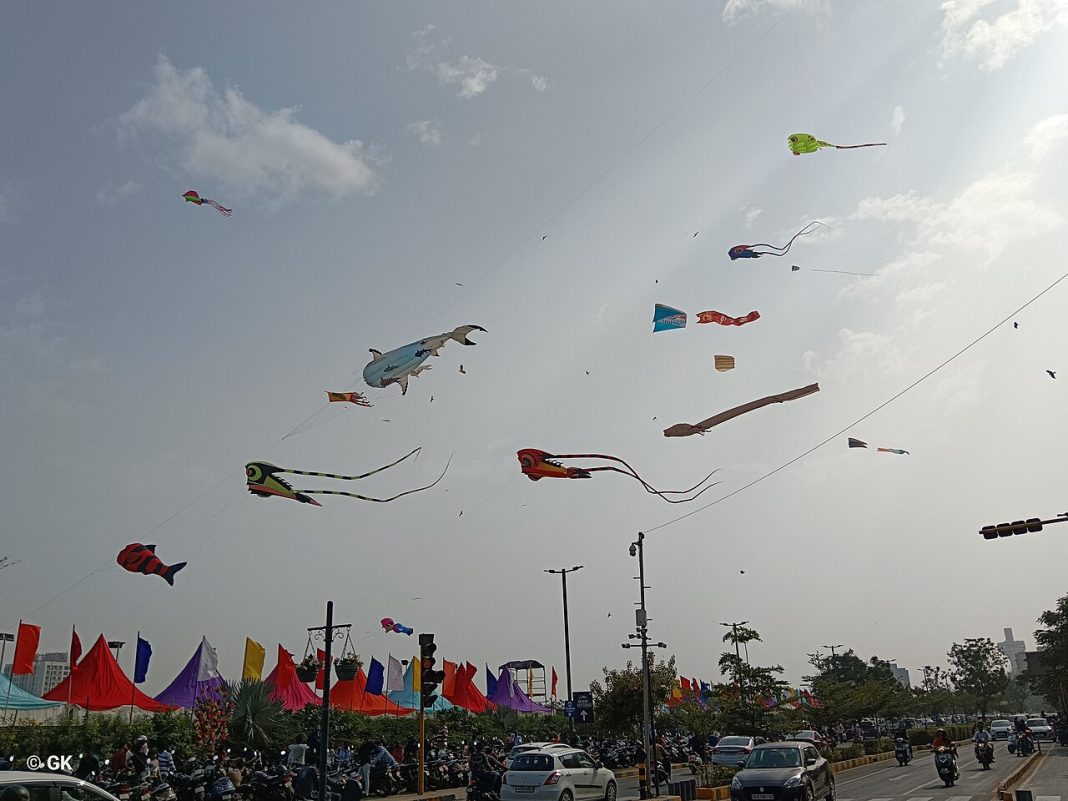

Uttarayan in Ahmedabad, the kite festival of India
Table of Contents
Uttarayan, also known as Makar Sankranti, is one of India’s most colorful festivals, and Ahmedabad is unquestionably its epicenter. Every January 14 and 15, the city transforms into a sea of flying kites, with thousands of residents taking to rooftops to celebrate this ancient harvest festival. In 2026, Uttarayan will be celebrated on January 14-15, marking the moment when the sun moves north (Uttarayana in Sanskrit), signifying the transition from winter to summer. The festival holds deep cultural significance for Gujaratis, blending astronomy, tradition, and celebration into two magical days.
Ahmedabad’s connection to kite flying runs centuries deep. The city has earned its reputation as the “kite capital of India” during Uttarayan. Unlike many Indian festivals that involve prayers and rituals in temples, Uttarayan is a communal rooftop celebration where neighbors compete, laugh, cheer, and connect over the simple joy of flying paper kites.
When is Uttarayan 2026?
Uttarayan is celebrated on January 14-15, 2026 across Gujarat and much of India. However, in Ahmedabad, the festivities extend beyond these two days:
- Pre-Festival Preparations: January 10-13, 2026 – Shops sell kites, thread, and sweets; rooftops buzz with practice flights
- Main Festival Days: January 14-15, 2026 – Peak celebration with rooftop competitions and International Kite Festival at Sabarmati Riverfront
- Post-Festival Activity: January 16-17, 2026 – Some neighborhoods continue flying
The most intense flying happens in the early morning hours (6 AM to 10 AM) and late afternoon (3 PM to 6 PM), with mild activity throughout the day.
The kites: types, names, and flying culture
Patang (paper diamond kite)
The Patang is the iconic Indian fighting kite used during Uttarayan. Unlike Western box kites or delta kites, the Patang is simple, elegant, and effective in competition. It’s a diamond-shaped kite made from thin tissue paper stretched over a bamboo frame. The beauty of the Patang lies in its minimalism: no tail, no complex rigging, just paper, bamboo, and string.
Patangs come in various sizes:
| Patang Type | Size | Best For | Wind Condition |
|---|---|---|---|
| Manjoli Patang | 10-12 inches | Beginners, children | Calm |
| Addhi Patang | 12-14 inches | Intermediate flyers | Light breeze |
| Pauni Patang | 16-18 inches | Competitive flying | Medium wind |
| Gol Patang | 18-20 inches | Experienced flyers | Strong wind |
| Tawa Patang | 20+ inches | Advanced competition | Very strong wind |
Manja: the secret weapon
Manja is the coated fighting thread that gives kites their competitive edge. The thread is coated with a carefully guarded paste made from glue, powdered glass, and colored dye. This coating creates an abrasive surface that can cut through an opponent’s string. Every family and kite shop in Ahmedabad has its own manja recipe, passed down through generations. The best manja is said to come from traditional suppliers in Lal Darwaja and Kalupur, where craftsmen have perfected their formulas over decades.
The strength of manja is measured in “cords,” meaning the number of strands twisted together. A 6-cord manja is perfect for small kites, while 9-cord and 12-cord versions are used for larger, competitive kites.
Firki (reel)
The Firki is the wooden reel that holds the manja-coated string. It’s not merely a tool, but an art form. Flyers develop deep bonds with their firkis, and the speed at which you can release or retrieve string directly affects your competitive success. Experienced flyers can execute rapid maneuvers by cutting through an opponent’s string and chasing their kite using precise reel control.
Where to fly kites in Ahmedabad
Rooftops across the city
The magic of Uttarayan happens on rooftops. Every rooftop becomes a battleground and gathering space. Some of the best rooftop experiences are in these neighborhoods:
- Old City (Bhadra, Manekchowk area): Dense concentration of tall buildings creates exciting aerial duels
- Navrangpura: Affluent neighborhood with spacious terraces and competitive flyers
- C.G. Road: Mix of residential and commercial rooftops with strong participation
- Ellisbridge: Lower population density means fewer kites but cleaner skies
- Memnagar: Family-oriented participation with festive atmosphere
Sabarmati Riverfront
The Sabarmati Riverfront hosts the official International Kite Festival 2026, running January 12-14. This is where you’ll find organized events, kite-flying demonstrations by international participants (from over 40 countries), food stalls, and cultural programs. Entry is free for all visitors. The riverfront provides a safer, ground-level alternative to rooftop flying, with ample space and structured activities. Expect live performances, kite market stalls, and thousands of visitors from across India and abroad.
Manek Chowk kite market
Before flying, visit Manek Chowk to purchase kites, manja, and thread. This historic wholesale market operates from early morning until late evening during the Uttarayan season. You’ll find:
- Patangs in every size and color
- Colored tissue paper and bamboo strips
- Ready-made manja in various strengths
- Pre-made firkis (reels) and spare thread
- Kite-fighting accessories
Prices are reasonable, ranging from Rs. 5-50 for a simple Patang to Rs. 200+ for premium branded kites. Lal Darwaja and Kalupur also have dedicated kite shops if Manek Chowk feels overwhelming.
Uttarayan food: a culinary celebration
Food is integral to Uttarayan. Families prepare traditional dishes that have been enjoyed for generations, each with symbolic meaning tied to the harvest and the changing season. For more on Ahmedabad’s food scene, explore Gujarati thali in Ahmedabad to understand the broader culinary context.
Undhiyu: the star dish
Undhiyu is the quintessential Uttarayan dish in Gujarat, especially Ahmedabad. It’s a slow-cooked vegetable curry made with seasonal produce: bottle gourd, eggplant, potatoes, and peas, along with methi muthia (fenugreek dumplings) and aromatic spices. The name “undhiyu” means “upside down,” referring to the traditional cooking method where the dish is cooked in an earthen pot buried in hot coals. Modern families cook it in pressure cookers or deep pans, but the flavor remains authentic: rich, warming, and unforgettable. Undhiyu pairs perfectly with bajra roti or puri.
Khichdi
A simple but nourishing dish of rice and urad dal cooked together with ghee and mild spices. Khichdi symbolizes the transition, a bridge between harvest and new growth. It’s comfort food at its finest, often served with salted or sweet preparations. Some families add jaggery and serve it as a semi-sweet khichdi.
Til and gur (sesame and jaggery sweets)
Sesame seeds (til) and jaggery (gur) are the soul of Uttarayan sweets, with deep roots in Ayurvedic tradition. Sesame is rich in calcium, iron, and healthy fats, while jaggery aids digestion and provides natural energy. The combination is particularly important because winter requires warming foods.
Til Ladoo: Round sweets made by rolling sesame seeds and powdered jaggery together. These are gifted to friends and family with the phrase “Tilgul khao, ghuno bolo” (Eat sesame sweets and speak sweet words).
Chikki: A brittle candy made from sesame seeds (or peanuts) and jaggery, boiled together and poured onto oiled marble slabs to cool. It’s snapped into uneven pieces and eaten as a satisfying crunch during kite-flying sessions.
Rewri: Similar to chikki but made with just jaggery and sometimes sesame, creating a lighter brittle.
Jalebi
Ahmedabad’s famous orange-coiled sweet, made with fermented dough that’s deep-fried and soaked in sugar syrup. While not strictly seasonal, jalebi is sold in abundance during Uttarayan and pairs well with morning tea while flying kites.
Chakli and Gathiya
Savory spiral snacks made from gram flour, these are enjoyed throughout the day during Uttarayan. They’re crunchy, long-lasting, and perfect for snacking between flying sessions on the rooftop. For more on sweets and snacks, see breakfast places in Ahmedabad.
Kite flying tips for visitors
Best time to fly
- Early Morning (6-9 AM): Strongest winds, least crowded, coolest weather
- Late Afternoon (3-6 PM): Second wind shift, festive atmosphere building
- Avoid: 11 AM – 2 PM (hottest, weak winds, more accidents)
Safety guidelines
- Manja Injuries: Manja-coated thread can cut exposed skin. Wear long sleeves, gloves, and cover your neck
- Rooftop Safety: Never lean over parapet edges. Use ropes and anchors
- Bird Hazards: Be aware of birds getting tangled in string. If you see an injured bird, call local wildlife rescue
- Traffic: Never chase fallen kites into roads. Use only marked pedestrian areas
Beginner’s tips
- Start with a basic patang: Buy a 12-14 inch Patang (Addhi) for your first flight
- Use pre-coated manja: If unsure, buy ready-made manja from a reputable shop to ensure quality
- Practice winding: Before attempting aerial combat, practice launching from a rooftop with steady winds
- Join a group: Fly near other enthusiasts to learn techniques and build confidence
- Keep spare string: Always carry extra manja and backups, as strings break frequently
International Kite Festival 2026 at the Sabarmati Riverfront
The Government of Gujarat organizes the International Kite Festival annually, bringing together flyers from over 40 countries. In 2026, the festival runs January 12-14 at Sabarmati Riverfront:
Dates: January 12-14, 2026
Location: Sabarmati Riverfront, Ahmedabad
Entry: Free
Timings: 8 AM – 6 PM
The festival features:
- International kite-flying competitions with flyers from across Asia, Europe, and beyond
- Demonstration flights by champion kite flyers
- Cultural performances and music
- Food stalls serving traditional Gujarati cuisine
- Kite market with vendors from across India
- Photography exhibitions and craft displays
Shopping for Uttarayan
Kite Markets
| Market | Location | Specialty | Best Time |
|---|---|---|---|
| Manek Chowk | Old City | Wholesale kites, manja, thread | 5 AM – 9 PM |
| Lal Darwaja | Old City | Premium kites, quality manja | 6 AM – 8 PM |
| Kalupur | Old City | Traditional manja, firki | 6 AM – 8 PM |
| Street Stalls | C.G. Road, Law Garden | Quick purchases, affordable | 10 AM – 10 PM |
Sweets and Food
- Traditional Sweets: Manek Chowk, Swaroop Sweets, Jumani Sweets
- Modern Bakeries: Sukh Sweets, Ketan Sweets
- Spice Shops: For til, gur, and dry fruits
Accommodation and logistics for visitors
If visiting Ahmedabad specifically for Uttarayan:
- Best Neighborhoods to Stay: Navrangpura, C.G. Road, Paldi (close to riverfront)
- Peak Bookings: Hotels fill up 3-4 weeks before Uttarayan. Book early.
- Transportation: BRTS buses, autos, and cabs are available; traffic is heavy on festival days. Plan extra time.
- Parking: Street parking is tight. Use paid parking lots near Sabarmati Riverfront.
Cultural significance
Uttarayan marks a turning point in the Hindu calendar. The sun’s northward journey (Uttarayana) is considered auspicious, symbolizing movement from darkness to light, from cold to warmth, from stagnation to growth. In ancient astronomy, this transition was tracked carefully, and festivals were timed accordingly. For more historical and cultural details, see the International Kite Festival in Gujarat on Wikipedia. For farmers, it signals the end of winter crops and the start of new planting seasons. For everyone else, it’s simply a day to celebrate community, culture, and the changing seasons together.
In Ahmedabad, Uttarayan transcends religion. You’ll find Hindu, Muslim, Christian, and Jain families all flying kites together on rooftops, reflecting the city’s syncretic culture.
Practical information for 2026
- Weather: January in Ahmedabad is cool (15-25°C), with brisk winds ideal for kite flying
- Crowds: Expect heavy footfall at Sabarmati Riverfront and markets. Travel early.
- Expenses: Kites (Rs. 5-200), manja (Rs. 50-300), food (Rs. 200-500)
- Photography: Free; Sabarmati Riverfront offers stunning photo opportunities
- Public Holidays: Uttarayan is a public holiday in Gujarat. Many offices and schools remain closed.
Last verified: January 2026
FAQ
What is the exact date of Uttarayan 2026?
Uttarayan is celebrated on January 14, 2026. However, in Ahmedabad, festivities begin from January 12 at Sabarmati Riverfront and continue through January 15 with rooftop flying.
Is manja-coated thread safe?
Manja can cut exposed skin if you come into contact with it directly. Wear full sleeves, gloves, and keep your neck protected. It’s safer than you might think if you follow basic precautions.
Can tourists participate in the International Kite Festival?
Absolutely. The International Kite Festival is open to everyone, free of charge. Visitors can purchase kites and manja on-site or bring their own from home. Ground-level flying at the riverfront is safer for first-timers.
Where should I buy kites in Ahmedabad?
Manek Chowk is the largest wholesale market. For quality, try Lal Darwaja or Kalupur. Street stalls along C.G. Road offer convenience if you’re staying in that area.
What’s the best beginner-friendly kite?
Buy an Addhi Patang (12-14 inches) from any market. Pair it with pre-coated manja from a reputable shop. These combinations cost under Rs. 100 and are perfect for learning.
Can I fly kites before Uttarayan 2026?
Yes, but illegally in many cities. Ahmedabad allows kite flying only during Uttarayan (January 14-15) and a few days before and after. Flying outside this window may result in fines.
What’s the safest place to fly for first-time visitors?
Sabarmati Riverfront during the International Kite Festival is the safest option. Ground-level flying, no rooftop risks, and organized spaces. Local rooftops are more authentic but require familiarity with the terrain.
How long do Uttarayan festivities last?
Main rooftop flying lasts 2-3 days (January 14-16, 2026), but the cultural celebration including shopping, eating sweets, and gatherings extends through January 20. The International Kite Festival itself is only January 12-14.
What should I wear during Uttarayan?
Light, layered clothing. January in Ahmedabad is cool (15-25°C) with strong winds. Wear full sleeves, long pants, and closed-toe shoes for protection from manja. Bring sunscreen and a hat for daytime flying.
Are there any events besides kite flying?
Yes. The International Kite Festival features live music, cultural shows, food stalls, and craft exhibitions. Many neighborhoods organize community gatherings and feasts on rooftops. Some organizations host garba or dance performances in the evenings.