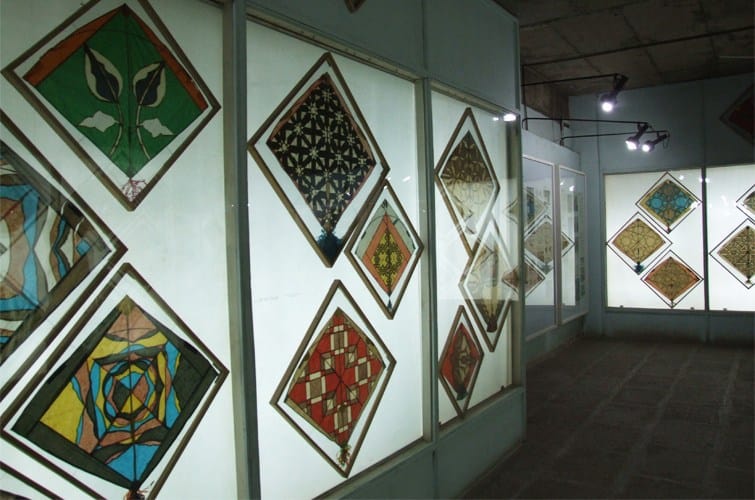

Ahmedabad takes its kites seriously. Every January, the skies above the city explode with colour during the International Kite Festival, one of the largest kite-flying events in the world. But the city’s relationship with kites runs deeper than one week a year. Tucked inside the landmark Sanskar Kendra complex in Paldi stands India’s only dedicated kite museum: a permanent tribute to the craft, history, and artistry of the kite in Indian culture.
Entry is completely free, and the collection spans over 125 kites from across India and the world. Whether you visit during the festival season or on an ordinary Tuesday afternoon, the Kite Museum is one of Ahmedabad’s most underrated cultural stops.
History of the Kite Museum
Table of Contents
The museum was founded on 26 February 1984 by Bhanu Shah, a passionate kite collector from Ahmedabad. Shah’s love for kites led him to build a personal collection over several decades. When the collection grew large enough, he donated all his kites to the Ahmedabad Municipal Corporation (AMC) with one condition: they must be put on permanent display for the public.
The AMC accepted the donation and created India’s first dedicated kite museum. Today the museum remains under AMC management and has continued to grow its collection beyond Shah’s original donation.
The Sanskar Kendra Connection
The museum is housed inside Sanskar Kendra, a cultural complex designed by the Swiss-French architect Le Corbusier in the 1950s. Corbusier conceived the building as a “Museum of Knowledge”: a grand civic cultural centre that would house collections covering natural history, archaeology, anthropology, folklore, and the performing arts. Of the full vision, only the Kite Museum wing and the City Museum were realised. The building itself is a heritage landmark: a rare example of Le Corbusier’s work in India outside Chandigarh.
What to see: the kite collection
The museum currently displays over 125 kites. They range from the traditional diamond shapes flown across Gujarat every Uttarayan to elaborate handcrafted pieces made for art and ceremony. Here are some of the standout exhibits:
Indian Traditional Kites
The core of the collection is Indian. You will see the classic flat diamond kites (locally called patang) in every size and finish, from bare tissue paper kites to elaborately painted pieces. Several kites feature Gujarat’s folk art traditions:
- Mirror-work kites: Fabric kites with hundreds of small mirror pieces embedded in geometric patterns, reflecting light as they move.
- Block-print kites: Kites decorated using traditional block-printing techniques, showing floral and geometric patterns in indigo and madder red.
- Garba dance kites: A 16-foot kite depicting a circle of women performing Garba, painted in bright Gujarat folk-art style. It is one of the largest single pieces in the collection.
- Radha-Krishna kites: Devotional kites with miniature paintings of Radha and Krishna, combining religious iconography with the playfulness of kite-flying.
International Kites
A significant portion of the collection comes from countries with strong kite traditions:
- Japanese Rokuku kites: Hexagonal in shape and made from over 400 individual pieces of paper, these kites demonstrate the precision and patience of Japanese kite-making. They are among the most visually striking pieces in the museum.
- Chinese dragon kites: Long, segmented kites shaped like dragons, designed to move in waves when airborne.
- French and European kites: Box kites and delta kites from Europe, showing how different cultures solved the aerodynamics of flight differently.
- Malaysian and Southeast Asian kites: Large ceremonial kites with bamboo frames and hand-painted surfaces.
Seasonal Displays
In the weeks around Uttarayan (the Makar Sankranti kite festival, typically January 14), the museum supplements its permanent collection with a seasonal display of that year’s most interesting kites. If you are visiting Ahmedabad during festival season, this is the ideal time to visit: the collection is at its fullest and the atmosphere around Sanskar Kendra is electric.
Kite-Making Craft: What the Museum Teaches
Beyond the display cases, the museum documents the craft of kite-making itself. Panels and exhibits explain the tools and materials involved: bamboo framing, the stretching and gluing of tissue paper, the making of manja (the abrasive kite-cutting thread), and the aerodynamics that keep different shapes airborne.
For children, this section is particularly engaging. It answers the basic question that every child asks after losing a kite fight: why does one kite cut another? The answer involves the angle of the frame, the tension in the string, and the properties of the manja. The museum explains it all clearly.
Practical Information
Entry Fee and Timings
| Detail | Information |
|---|---|
| Entry Fee | Free |
| Opening Days | Tuesday to Sunday |
| Closed | Monday and public holidays |
| Timings | 10:00 AM to 6:00 PM |
| Photography | Permitted |
Address and Location
Kite Museum, Sanskar Kendra Complex
Bhattacharya Road, Paldi
Ahmedabad 380 006
The museum is on the east bank of the Sabarmati River, near Paldi bridge. It is approximately 3 km from Ahmedabad railway station.
How to Reach
By auto-rickshaw or taxi: The most common way. Ask for “Sanskar Kendra, Paldi”. The name is well known. Fare from the railway station area is roughly ₹50–80 by meter.
By AMTS/BRTS bus: Several city bus routes pass through Paldi. Ask for the Paldi bus stop and walk towards Bhattacharya Road.
By car: Parking is available at Sanskar Kendra. Approach from Relief Road or Paldi bridge.
Best Time to Visit
The museum is open year-round, but the best time to visit is around Uttarayan (14 January). In the two weeks before and after the festival, the museum adds special displays and the kite-making demonstrations become more frequent. The energy of the city during kite season makes the experience richer. You will see the kites in the museum and then look up at the sky and see the same shapes being flown.
For a quieter visit with more time to study the exhibits, any weekday outside festival season works well. Mornings are less crowded.
Tips for Visiting
- Allow 45 to 60 minutes inside; the collection is not enormous but rewards careful looking.
- Combine the visit with Sanskar Kendra’s City Museum, which is in the same complex and also free.
- If you are visiting with children, the international kite section and the large Garba kite tend to hold attention the longest.
- Bring a camera. Photography is permitted and the kites photograph beautifully against the white walls.
- For context on Ahmedabad’s broader museum scene, the museums in Ahmedabad guide covers 12 of the city’s best collections.
Nearby Attractions
Sanskar Kendra is well placed for a half-day cultural trail. Within a short distance:
- Hutheesing Jain Temple (2 km): an ornate 19th-century Jain temple built in white marble
- Sidi Saiyyed Mosque and its famous jali (3 km): the tree-of-life stone lattice window, one of Gujarat’s most photographed heritage pieces
- Adalaj Stepwell (12 km): a five-storey step well from the 15th century, blending Hindu and Islamic architectural styles. The Adalaj Stepwell guide has full directions and timings.
For a full day out in Ahmedabad that includes the kite museum, many visitors combine it with the Kankaria Carnival when it runs in December, or simply explore the old walled city on foot.
Frequently Asked Questions
Last verified: March 2026
Is the Kite Museum really free to enter?
Yes. There is no entry fee to visit the Kite Museum. Both the Kite Museum and the City Museum at Sanskar Kendra are free and open to the public Tuesday through Sunday.
How many kites are in the collection?
The collection has over 125 kites. They include Indian traditional kites, Japanese Rokuku kites, Chinese dragon kites, French box kites, and a range of handmade folk-art pieces from Gujarat.
Can I visit the Kite Museum on a Monday?
No. The museum is closed every Monday and on public holidays. Plan your visit for Tuesday through Sunday between 10 AM and 6 PM.
Is the Kite Museum suitable for children?
Yes, very much so. The large Garba kite, the Japanese Rokuku kites, and the exhibits explaining kite-making and manja are all popular with children. The free entry also makes it an easy family outing.
Is the Kite Museum the only one in India?
It is widely recognised as India’s only dedicated kite museum. There is no comparable standalone kite museum elsewhere in the country.
Where exactly is the Kite Museum?
Inside the Sanskar Kendra complex on Bhattacharya Road, Paldi, Ahmedabad. The building was designed by architect Le Corbusier in the 1950s and is itself a heritage landmark.
The Kite Museum pairs well with a day in Ahmedabad’s historic district. The Ahmedabad heritage walk through the walled old city — just 3 km away — covers Bhadra Fort, Jama Masjid, Sidi Saiyyed Mosque, and the network of pols, and is manageable in a morning before or after your museum visit.